Craft in Every Detail
Responsible craftsmanship is not something you can simply write into a policy document and leave there. It lives in the workshop: in the decisions made before the first cut, in the weight of the wood in your hands, and in the question you ask yourself every time you pick up a piece of material that took decades to become what it is.
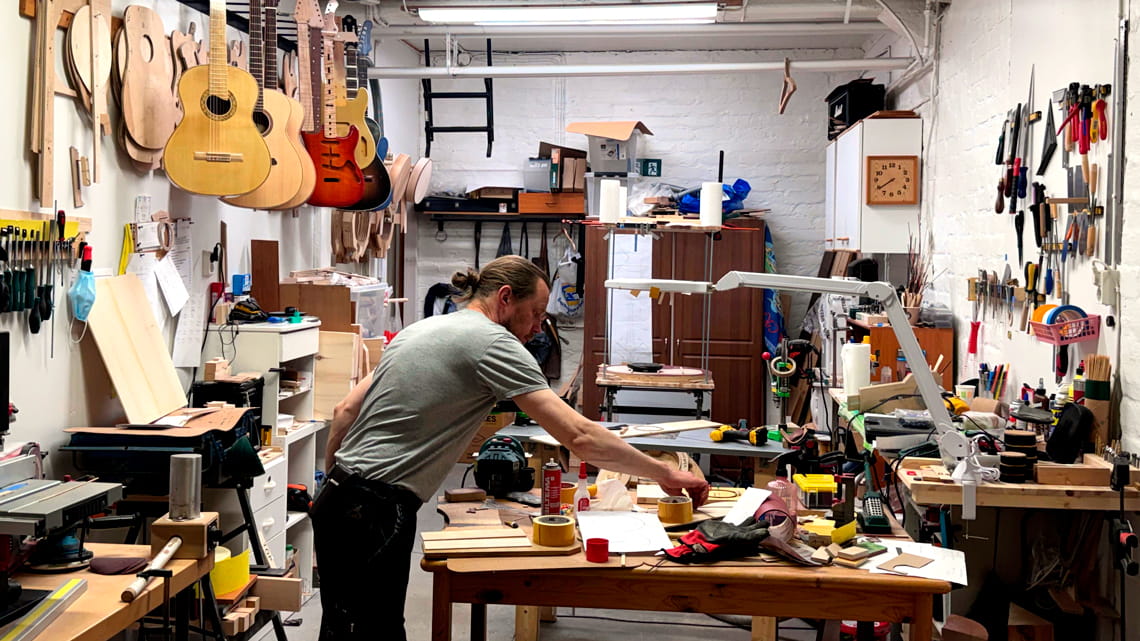
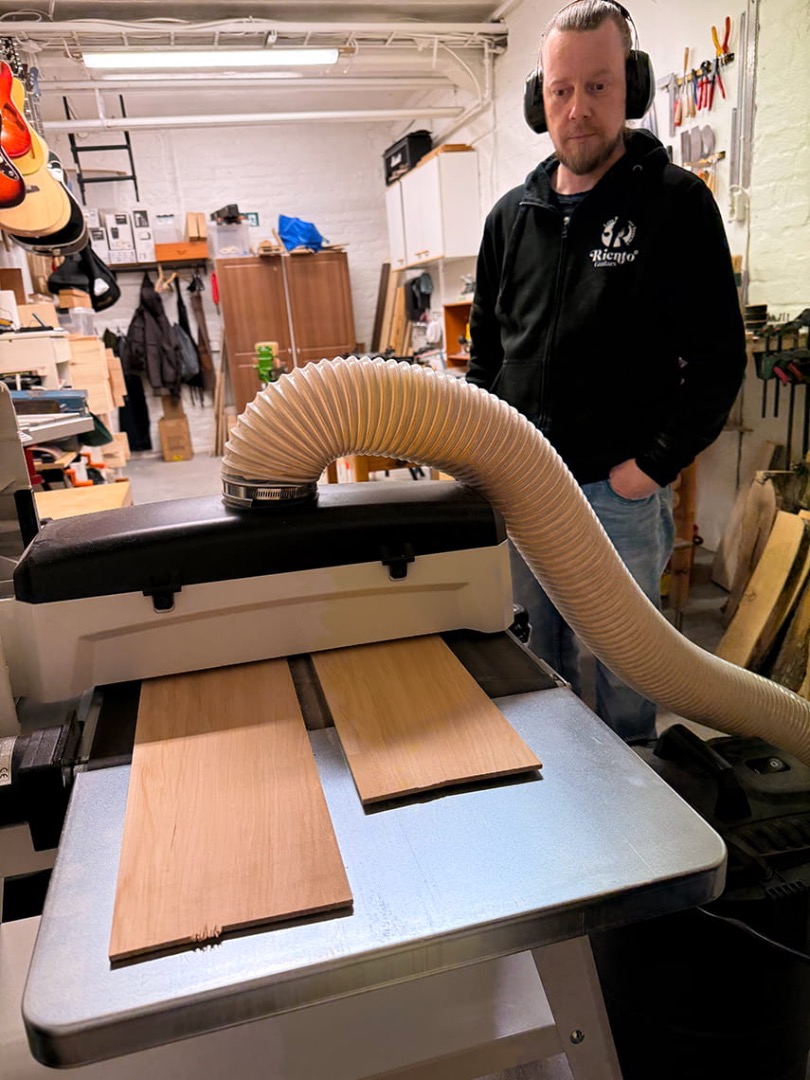
Responsible craftsmanship at Riento begins in the Finnish workshop, with Ville-Veikko Ponkiniemi, the lead luthier whose daily work turns wood, patience and precision into instruments built to last. For him, sustainability is never just a slogan. It is part of how materials are chosen, how waste is avoided and how every guitar is made to endure.
The wood is never just wood
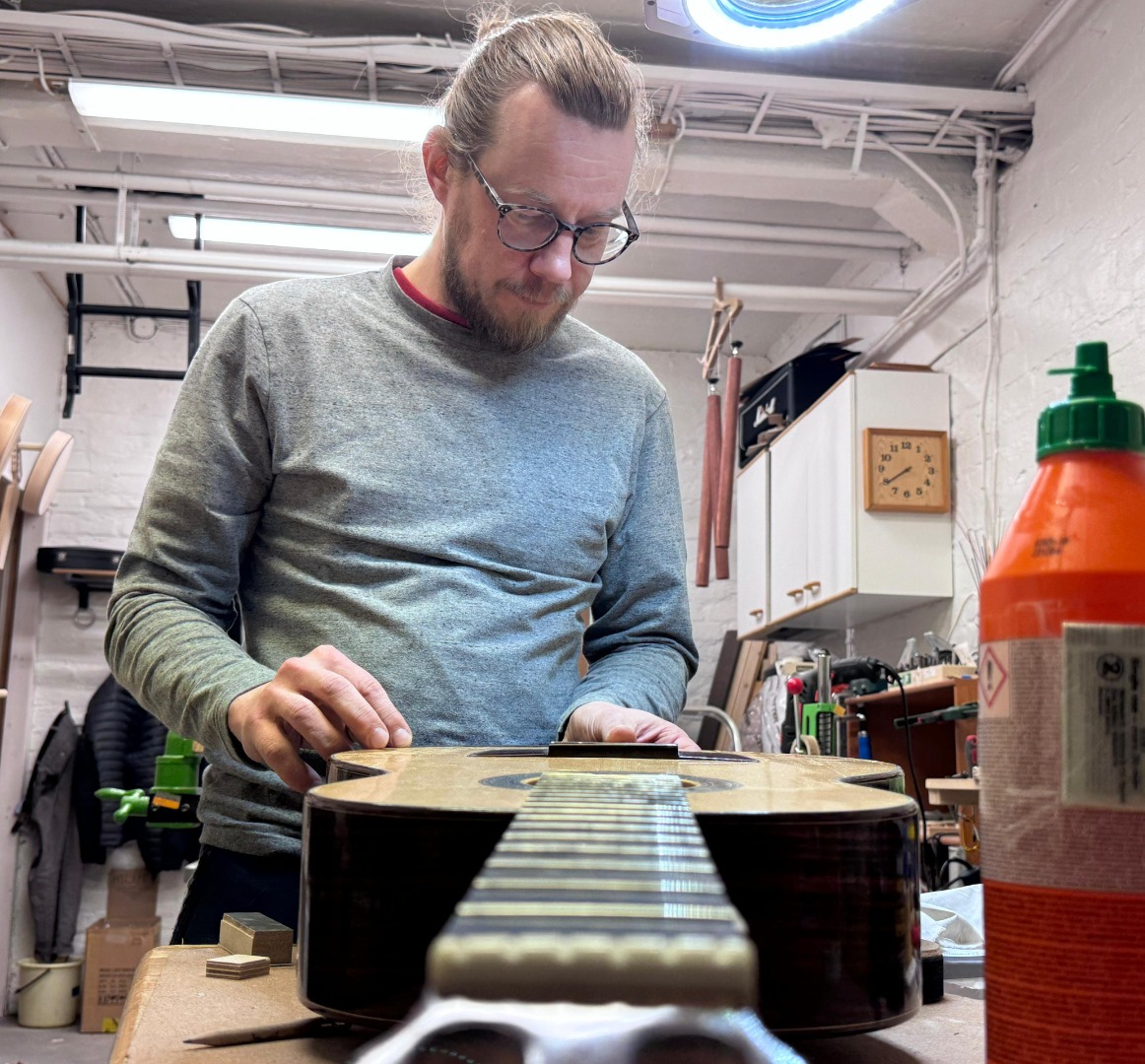
For Ville-Veikko, the relationship with wood began long before the workshop. He grew up among Finnish forests, selling timber to sawmills and burning wood to heat his own home. Back then, wood was a material. Today, it is something entirely different.
“It’s not just wood anymore. It has to be the right kind of wood, cut in the right way, so that it can become instrument-grade wood.”
Every piece that enters the Riento workshop is evaluated against the needs of the instrument: grain orientation, cut direction, density and moisture content. Nothing is selected carelessly. Nothing usable is treated as waste. What changed was not the wood itself, but the eyes looking at it.
Taking less, using more
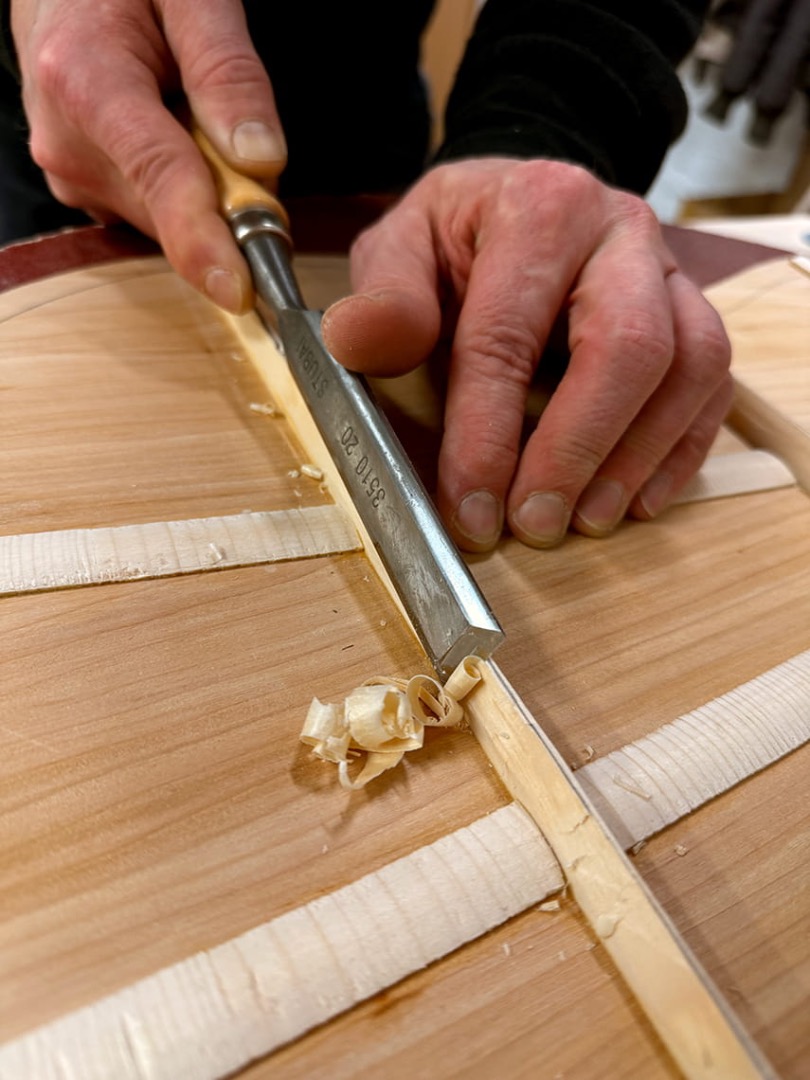
Reducing waste is not a slogan. It is a personal commitment that runs through every stage of the build process. When Ville-Veikko approaches a board, he does not see only what he needs. He sees everything the material can become.
“If I have even the slightest chance of using the same piece of wood for two different purposes, I will do that.”
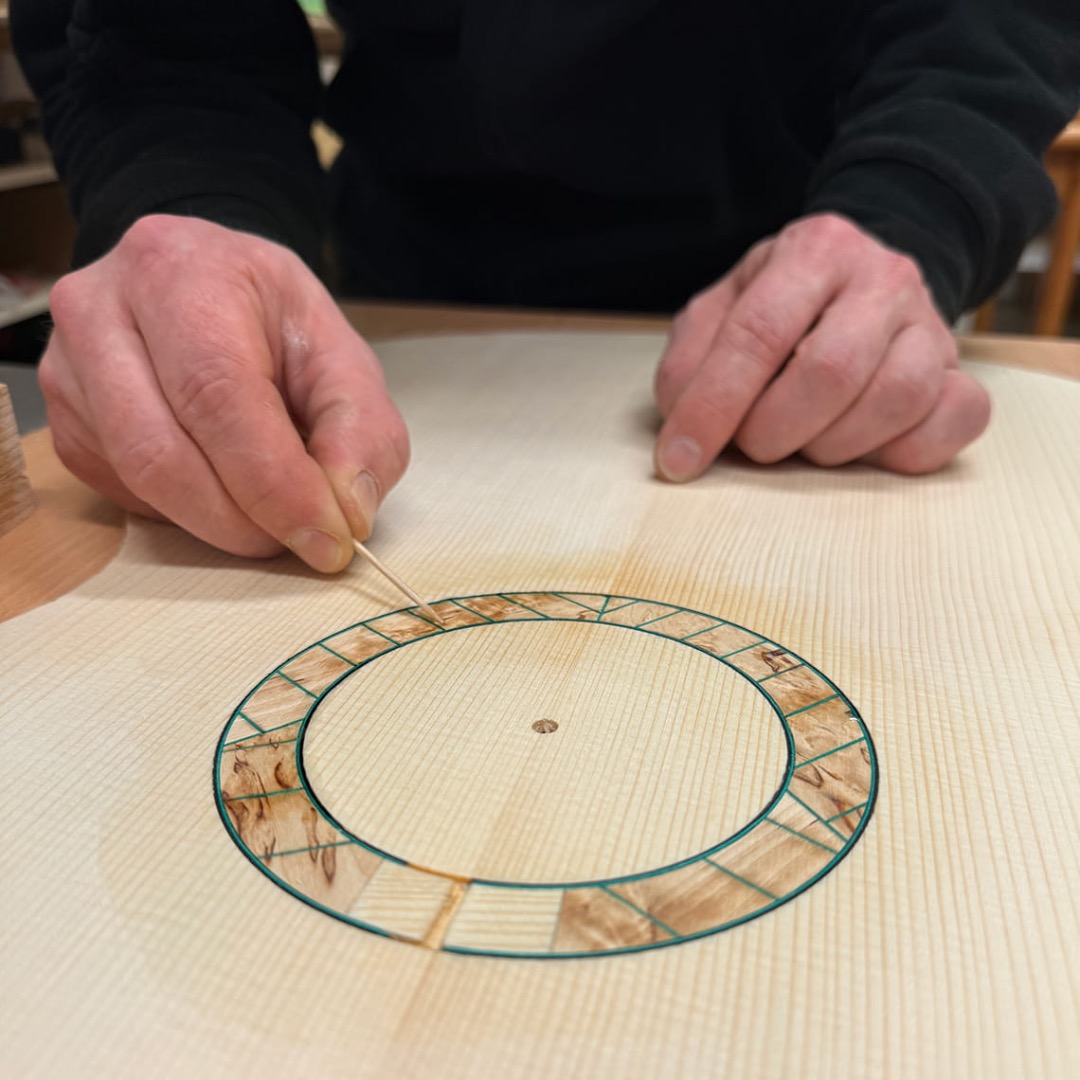
Exotic wood offcuts are saved for small decorative details, repairs and future builds. Larger domestic wood scraps are used for heating homes. Packaging materials from incoming orders are reused whenever possible for outgoing guitars. Sawdust is one of the few things that cannot truly be saved.
In a workshop built on this mindset, waste is not an afterthought. It is something considered before the first cut is made.

Built to outlast its maker
A guitar is one of the few objects made today that is genuinely expected to improve with age. That makes longevity an environmental question, one that must be answered in every build. A guitar built to last fifty years means fifty years of not needing to replace it.
“I’d like the guitars that I’ve built to be around, even when I’m not.”
Ville-Veikko builds with that timeline in mind. He selects materials for long-term structural integrity, constructs joints that are meant to hold for decades, and finishes surfaces so they can age gracefully rather than simply wear out.
Longevity is not a feature added at the end. It is one of the foundations of every Riento guitar.
The imperfect instrument
One thought from Ville-Veikko captures the spirit of this approach.
“A guitar is an instrument that speaks to people personally. It’s imperfect, just like a human being.”
That imperfection is not a flaw in the craft. It is proof of a human hand: real wood, real touch and real responsibility.
That is what responsible craft has always meant at Riento. And it is what it will continue to mean, long after the sawdust settles.